
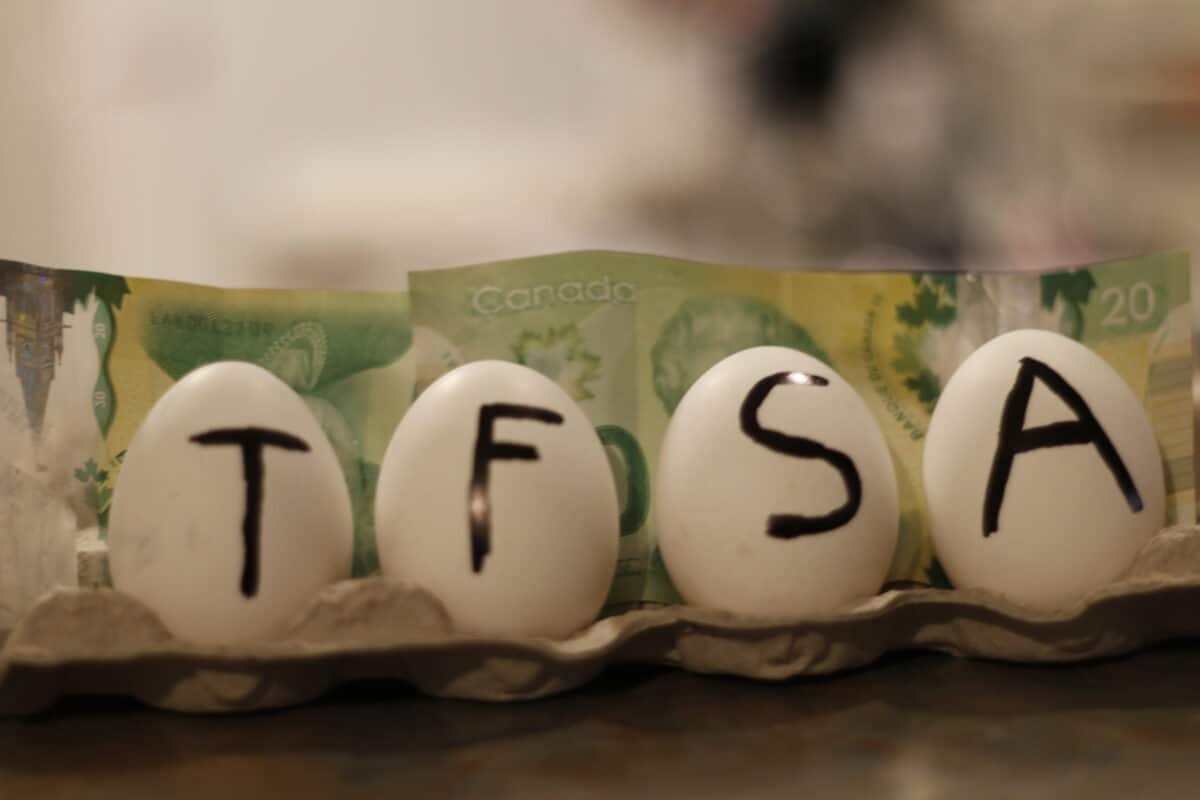
As large as you can make it while staying within the limits of your contributions and risk tolerance.
That’s my simple answer. But, unfortunately, far too many Canadians aren’t investing in stocks with their TFSAs, instead opting to hang onto savings, GICs, and other low-risk, low-return securities or high-fee mutual funds for which they have no idea what’s inside (bond funds? index funds? active funds? a bit of everything?).
Indeed, there’s a better way to go if you’re looking for your TFSA to climb at a rate far above inflation. In any case, it’s a tough year for Canadians, with affordability remaining a concern, all while employment comes in a bit mixed. Of course, this isn’t a recession, but it can certainly feel a bit difficult to justify spending on the discretionary items when one’s grocery bill just keeps getting higher despite being far more cost-conscious.
Given this, it’s understandable why one can’t find a way to contribute all too much to a TFSA, RRSP, or any investment account. For those who have TFSA cash sitting in cash, though, or a GIC that’s maturing soon, I do think it’s worth exploring potential opportunities within the stock market, provided you’re comfortable putting in the due diligence and accepting the fact that higher risk comes with higher returns.
Doing one’s best to set their TFSA for retirement
The way I see it, you can either save safely and collect small amounts of interest that leave you exposed to inflation, or invest in a high-quality business that can help you actually get ahead. Indeed, inflation’s a rising tide that could become a serious issue for investors who are too heavy in cash and too light on equities, even given the rising chance of a correction at some point.
As an investor, corrections (and worse) are par for the course. I’ve said it before, and I’m saying it again! With more experience and liquidity, though, one can learn to relish such moments when stocks are marked down across the board. That’s when real bargains come to be.
So, in any case, if you want your TFSA to help you retire well, use it to invest and do your best. Instead of setting arbitrary figures for how large it should be or pressuring yourself with annual return goals, I think it makes most sense to own shares of top-notch firms for years at a time.
The buy-and-hold mindset, I think, can yield marvelous results, especially when you take capital gains taxes and dividend taxes completely out of the equation. If you want to set actual financial targets after ensuring you’re contributing and investing, have a sit-down with your financial adviser to put everything together and do all the math.
With the volatility surrounding some corners of tech (most notably the AI chip plays and everything surrounding it), I’d argue that the TSX Index is the place to be.
Vanguard FTSE Canadian High Dividend Yield Index ETF
Something like the Vanguard FTSE Canadian High Dividend Yield Index ETF (TSX:VDY), a solid-performing 3.1%-yielder that I’ve praised on numerous occasions, is a fine fit for a TFSA. It’s been a smooth ride higher in the past year. And while turbulence could pick up after the latest parabolic move, I still see the ETF as very fairly valued at less than 20 times trailing P/E, especially considering how many tailwinds are facing the banks and energy names.
The VDY is basically a bank-heavy ETF with a jolt of energy (pipelines and producers) and a sprinkle of dividend payers from other corners. Given the unstoppable rally in the banks and pipelines and how well they’re positioned to monetize AI, these industries are exactly where I’d want to be.
Sure, the VDY might not be the best for diversification or cost minimization, but it’s an ETF I’m sticking with, given I want more concentration in Canadian banks and energy.